Front porch flower pots are one of the easiest ways to completely transform the entrance of your home, without a renovation budget or a green thumb. Whether your porch is a grand wraparound or a narrow apartment stoop, the right combination of pots and plants signals warmth, style, and intention the moment someone arrives.
Why Front Porch Flower Pots Matter (More Than You Think)
Curb appeal is not just a real estate term. It’s the first emotional impression your home makes. Studies in environmental psychology consistently show that well-tended outdoor greenery increases perceived home value and creates a sense of welcome that a freshly painted door alone cannot replicate.
Front porch flower pots are especially powerful because they are:
- Flexible: you can change them seasonally without permanent commitment
- Scalable: they work on a tiny balcony and a sprawling farmhouse porch alike
- Immediate: unlike garden beds, results are visible from day one
- Personal: pot style, plant choice, and arrangement all reflect your aesthetic
For anyone decorating their home entrance, flower pots are the highest-impact, lowest-effort investment available.
1. The Classic Symmetrical Pair
Best for: Traditional, colonial, and craftsman-style homes
The most timeless front porch flower pot arrangement is simply two matching pots flanking your front door. This is classic for a reason: symmetry reads as balanced, intentional, and welcoming.
How to style it:
Choose tall, architectural pots: think black cast-iron urns, white Grecian-style planters, or aged terracotta. Plant them identically: a central thriller plant (such as a standard bay tree, boxwood topiary, or tall ornamental grass) surrounded by a frothy filler like white bacopa or trailing ivy.
Pro tip: Keep the pot height proportional to the door. A low, wide pot next to a tall door looks lost. As a rule, your pots should reach at least one-third of the door’s height.
2. The Layered Height Composition
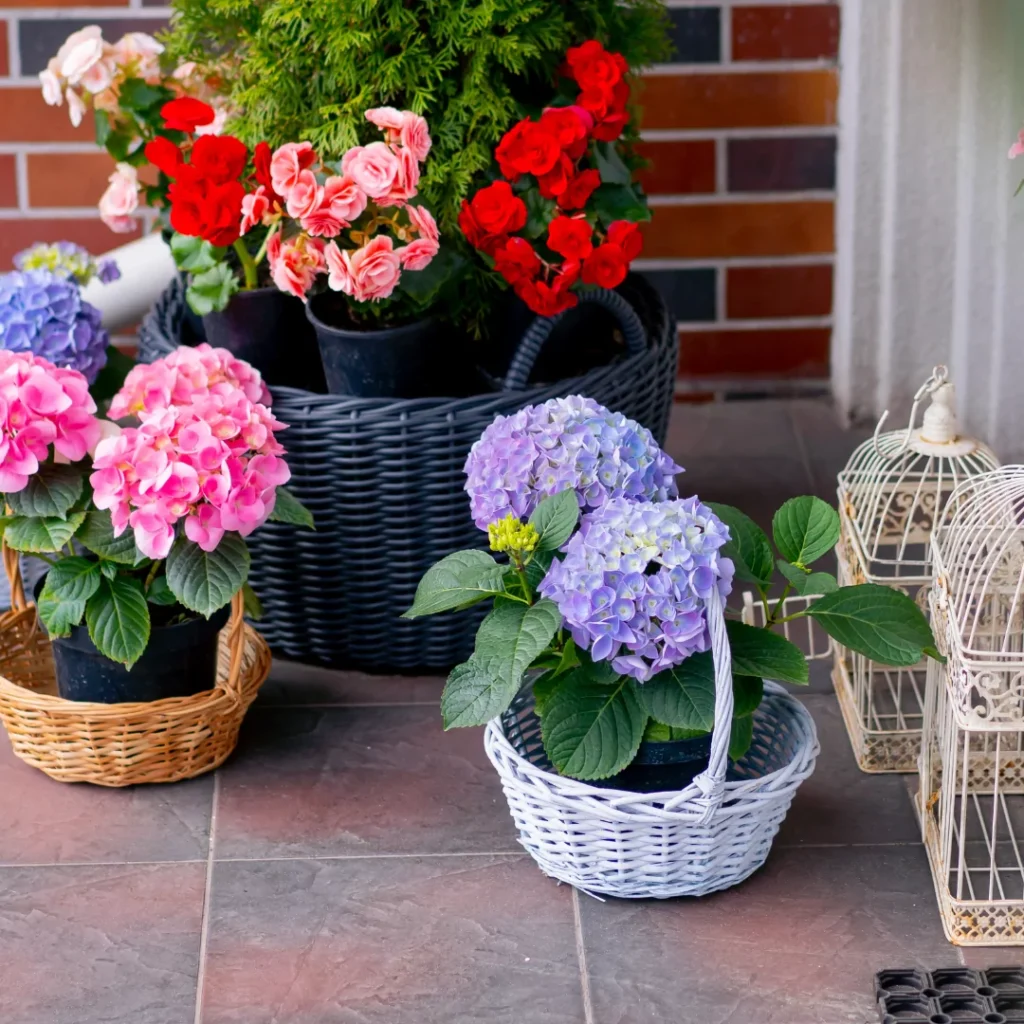
Best for: Porches with depth or a landing area
Rather than placing all pots on the same level, create a tiered arrangement using pots of three different heights. This draws the eye upward and creates a lush, almost garden-like feel even in a small space.
How to layer:
- Tallest (back or sides): A statement pot with a vertical plant, papyrus, ornamental grasses, or a small olive tree
- Medium (center): Flowering annuals like zinnias, dahlias, or petunias
- Lowest (front edges): Trailing plants, sweet potato vine, lobelia, or creeping jenny
This composition mimics how professional garden designers think: thriller, filler, spiller, but expanded across multiple containers.
3. The Terracotta Cluster
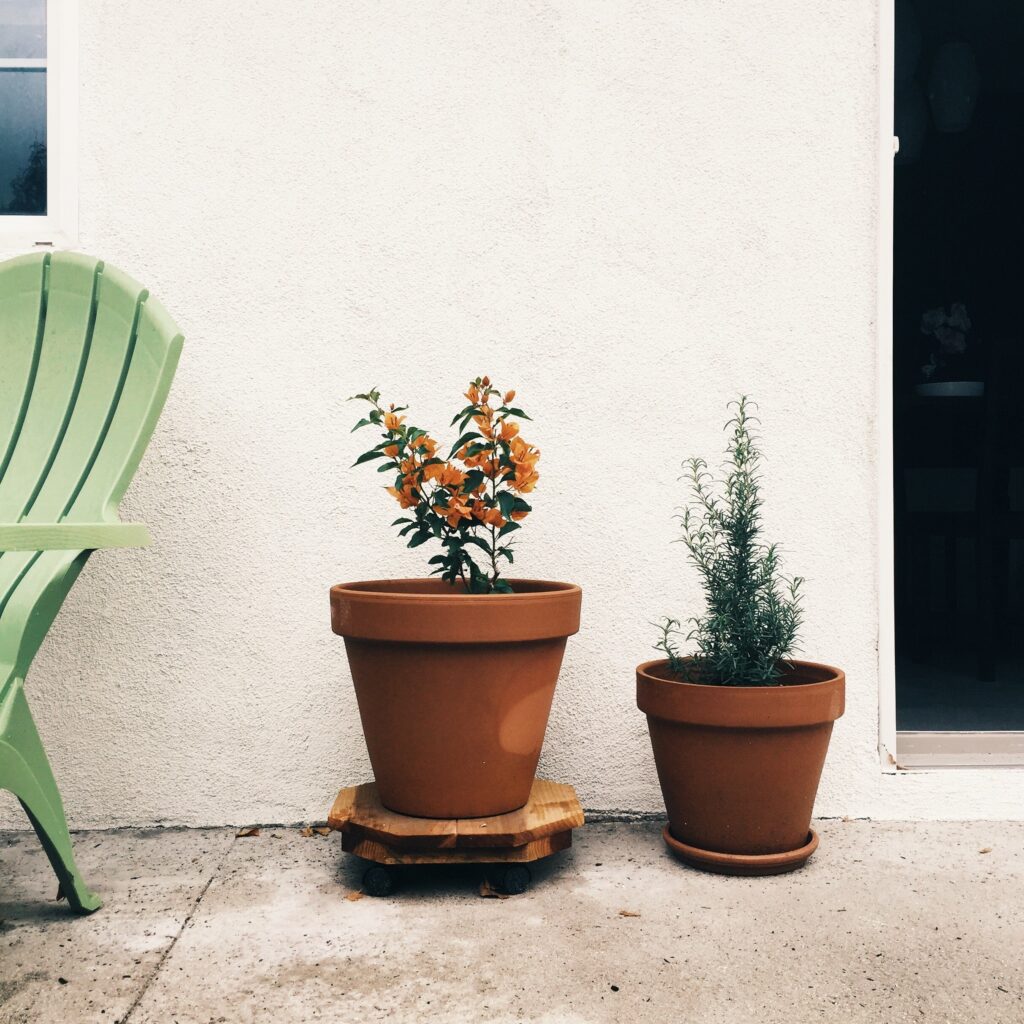
Best for: Mediterranean, rustic, and bohemian aesthetics
Terracotta pots have experienced a major design revival. Far from being dated, a well-curated cluster of terracotta in varying sizes is one of the most Pinterest-worthy front porch flower pot ideas right now.
What makes it work:
The key is variance. Use pots of genuinely different diameters, from a small 10cm pot to a large 50cm statement piece. Arrange them in an asymmetric cluster, slightly overlapping, as if they’ve been collected over years.
Plant pairings that work beautifully with terracotta:
- Lavender (classic Mediterranean)
- Cacti and succulents (modern minimal)
- Herbs like rosemary and sage (rustic kitchen garden feel)
- Geraniums in deep red or coral (traditional European cottage)
The warm orange-brown tones of terracotta work especially well against white-rendered or stone-effect exterior walls.
4. The Monochromatic Color Story
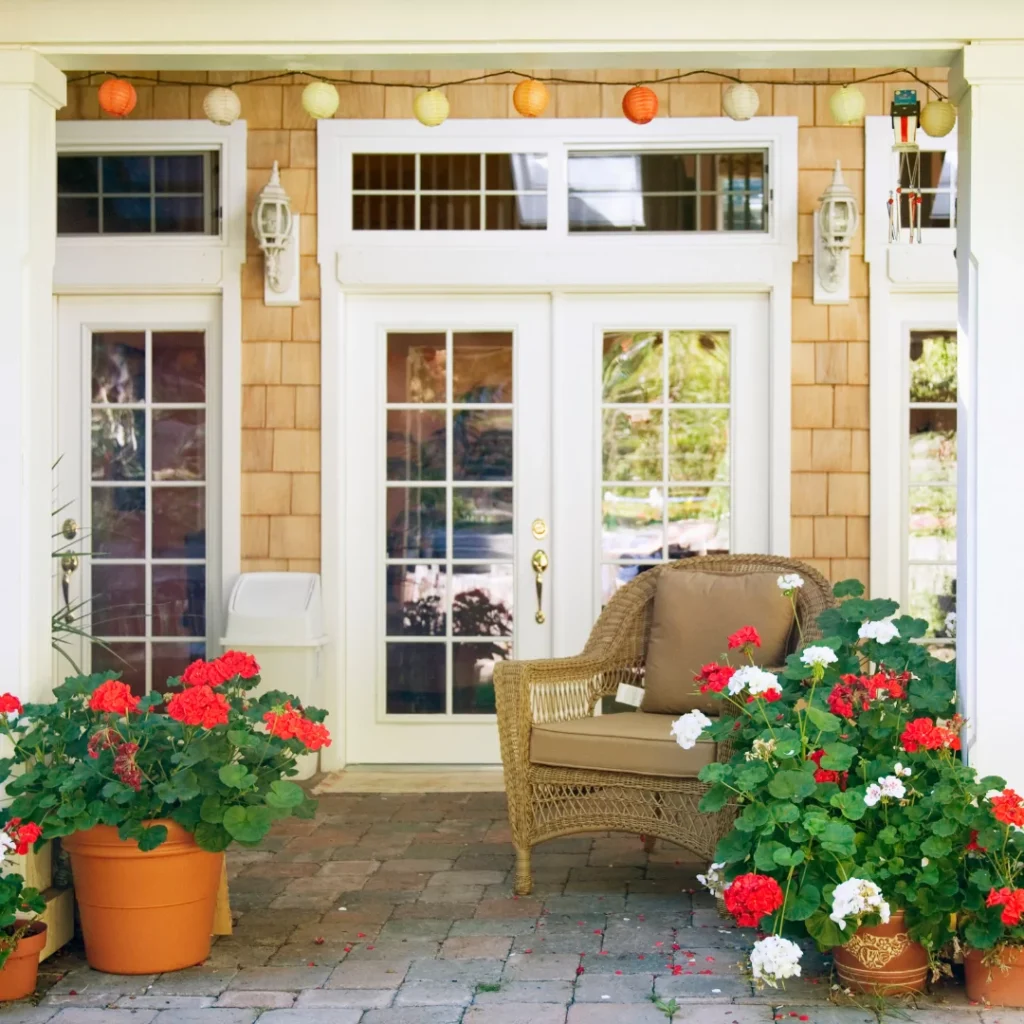
Best for: Contemporary and editorial-minded homes
Instead of a riot of color, choose one or max. 2 flower color and commit to it entirely. An all-white porch planting (white petunias, white geraniums, white calibrachoa) looks strikingly sophisticated. An all-burgundy scheme using dahlias, dark ornamental kale, and deep coleus reads as genuinely editorial.
Why this works:
Monochromatic planting is a professional designer’s technique. It creates visual cohesion that mixed-color planting rarely achieves. When photographed, it also produces the kind of clean, high-quality imagery that performs well on Pinterest.
Color stories that photograph exceptionally:
- All white + silver foliage: timeless, high-end
- All blush and dusty pink: romantic, very popular in Dutch and Belgian design aesthetics
- All deep purple/burgundy: moody, editorial
- All yellow and chartreuse: energetic, summery
5. The Evergreen Foundation
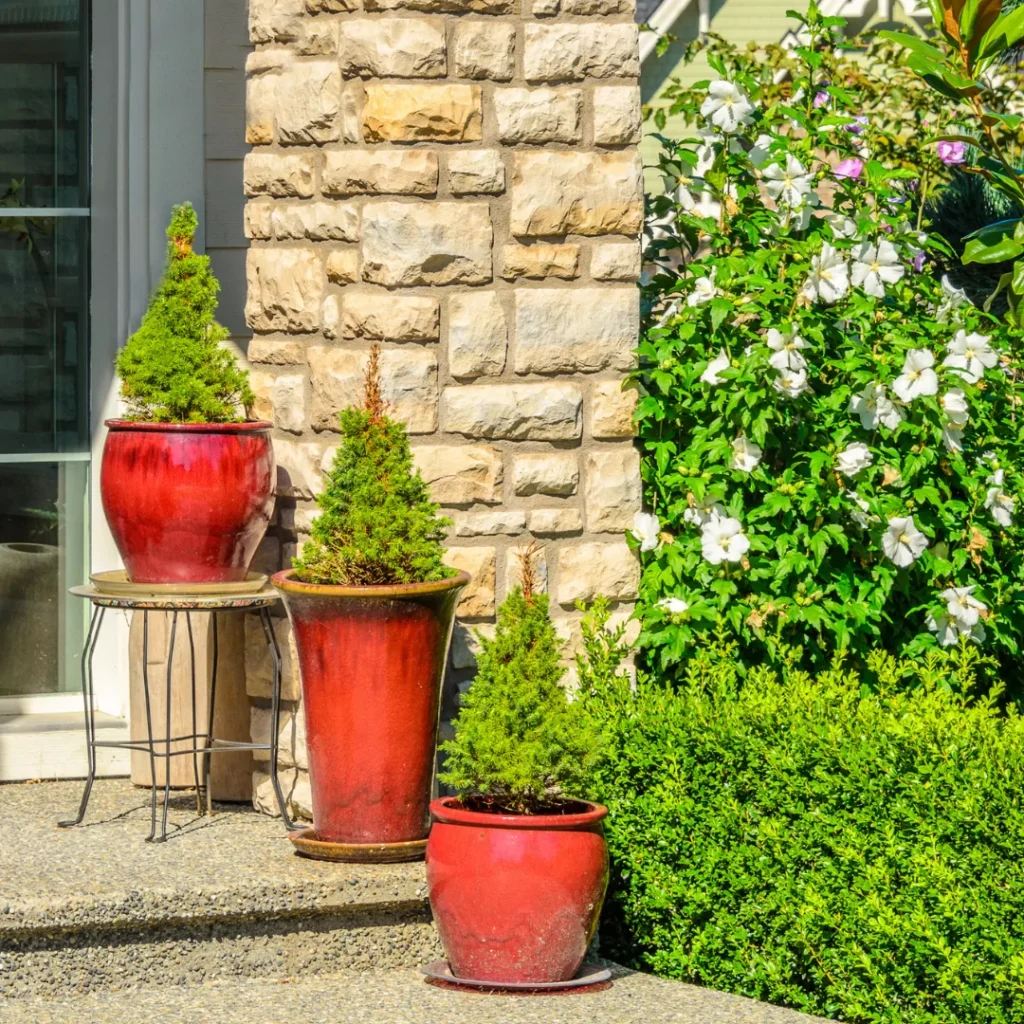
Best for: Year-round impact, low-maintenance lifestyles
The most common mistake with front porch flower pots is choosing only seasonal flowers, which look stunning in July and bare in November. Instead, anchor your arrangement with evergreen structural plants that provide visual interest regardless of the season.
Best evergreen anchors for front porch pots:
- Boxwood (Buxus): Classic, architectural, clips into neat spheres or cones
- Bay laurel (Laurus nobilis): Elegant standard trees, aromatic, Mediterranean feel
- Euonymus: Variegated foliage, extremely hardy
- Dwarf conifers: Dense, structural, available in silver-blue to deep green
Around the evergreen base, you rotate seasonal flowers: tulips and hyacinths in spring, petunias and begonias in summer, ornamental kale and late chrysanthemums in autumn.
This approach gives your front porch flower pots a permanent backbone and only requires seasonal top-dressing.
6. The Statement Oversized Pot
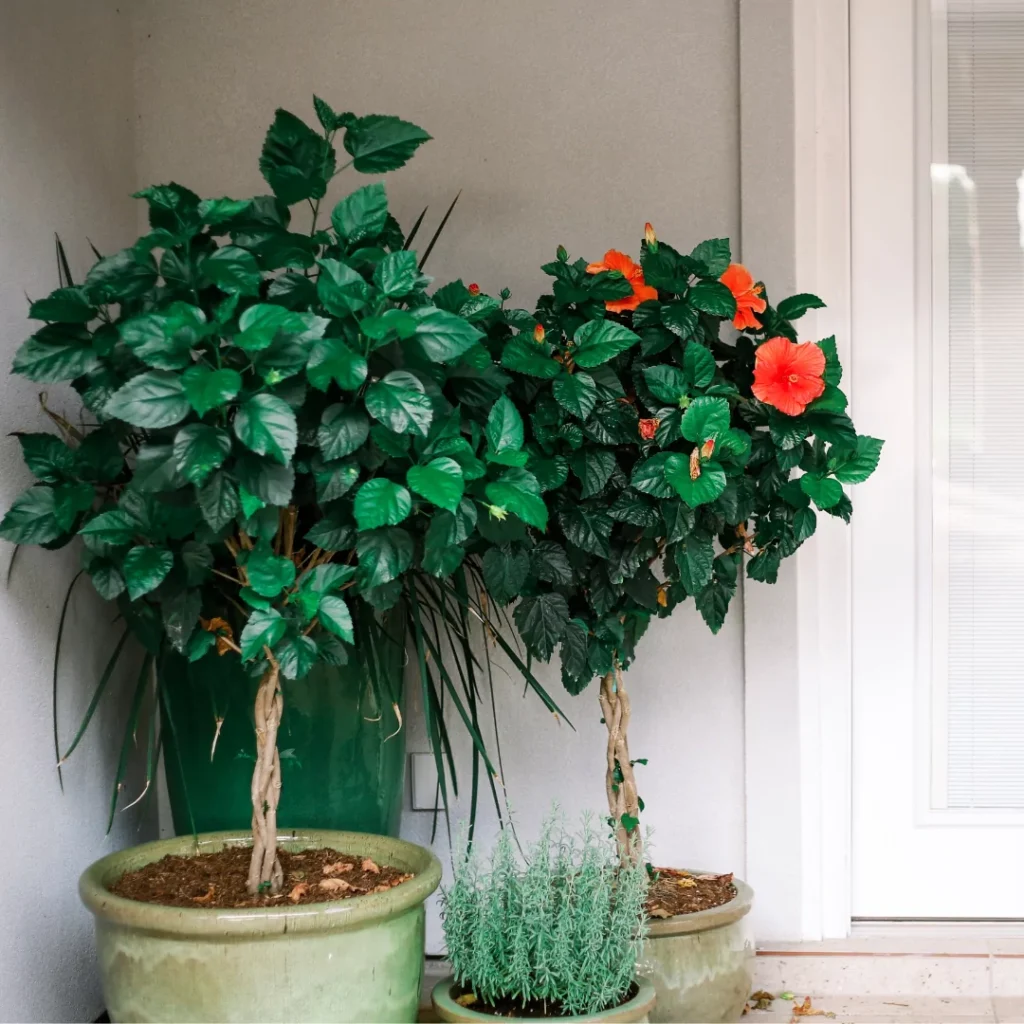
Best for: Minimalist and modern homes
Sometimes one extraordinary pot does more than six ordinary ones. A single oversized planter, 60–80cm in diameter, placed deliberately at the side of a front door creates a confident, sculptural focal point.
What to plant in an oversized statement pot:
- A large ornamental grass like Pennisetum or Miscanthus (dramatic movement in the wind)
- A standard olive tree (looks expensive, extremely low-maintenance once established)
- A tall Phormium in deep red-black (modern, architectural)
- Agapanthus (elegant, flowers reliably all summer)
Pot material matters here. For an oversized statement piece, invest in quality: powder-coated steel, genuine stone, or high-quality fibreglass that convincingly mimics concrete or zinc. Cheap plastic at this scale reads immediately as cheap.
7. The Hanging and Standing Combination
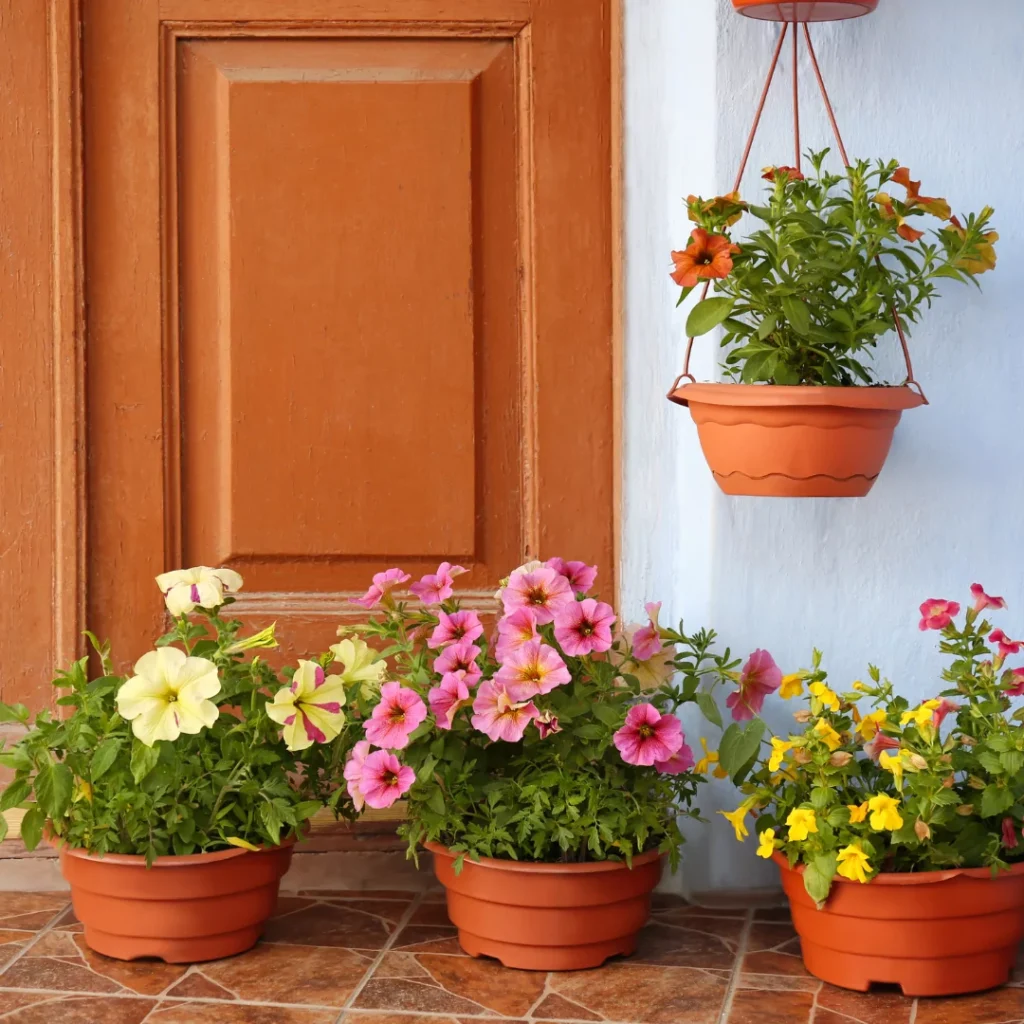
Best for: Porches with an overhead structure or roof
If your porch has a ceiling, pergola, or overhanging beam, hanging baskets add a vertical dimension that floor pots alone cannot create. The combination of hanging baskets above and pots below creates a lush, layered entrance that feels like walking through a garden.
How to execute this well:
The most important thing is visual continuity. Use the same or complementary plants in both hanging and standing containers. If your hanging baskets feature trailing fuchsia and white calibrachoa, your floor pots should echo those colors.
Hanging basket plants that perform best:
- Trailing petunias (incredibly prolific, long season)
- Fuchsia (shade-tolerant, elegant drooping flowers)
- Trailing lobelia (delicate, cottage feel)
- Trailing begonias (shade to partial sun, bold flowers)
8. The Herb Garden Entrance
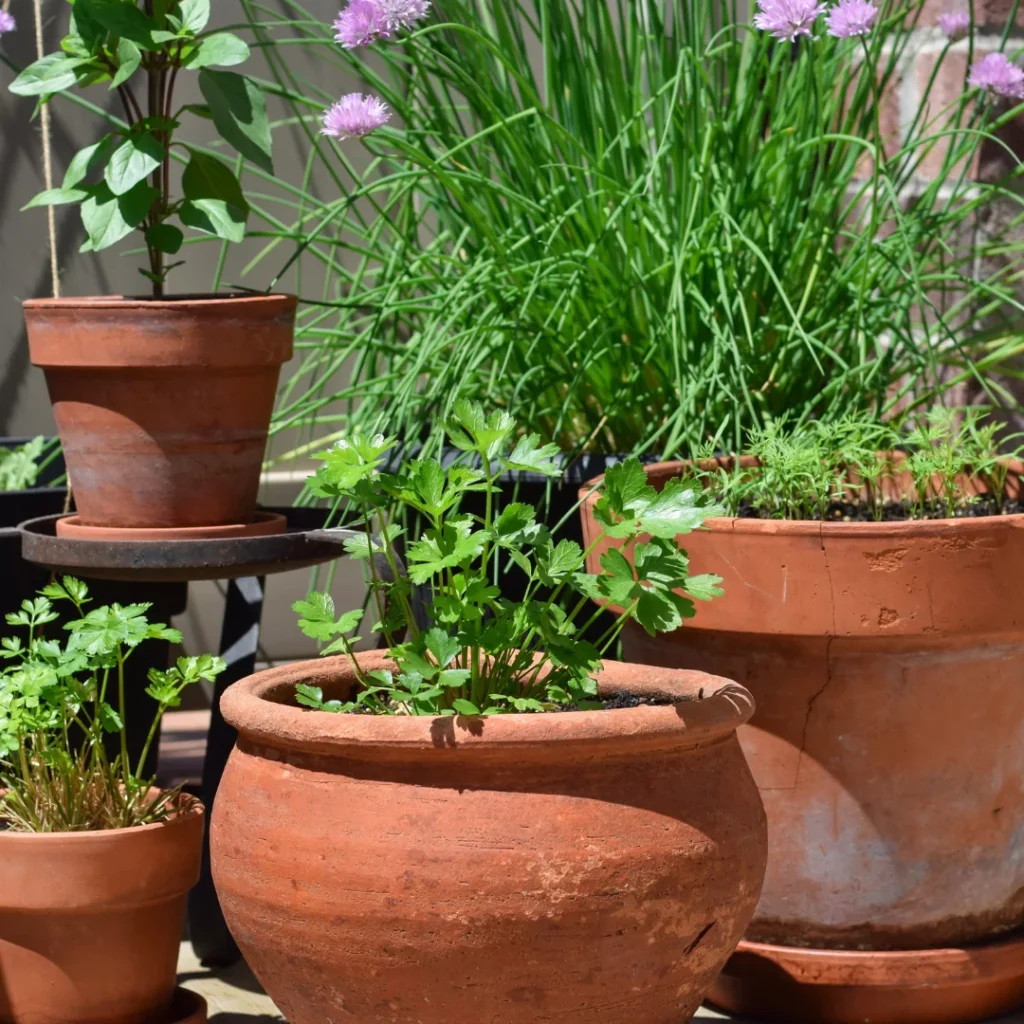
Best for: Kitchen-focused homes, cottages, and anyone who cooks
Planting herbs in front porch flower pots is a trend that has moved well beyond the kitchen garden aesthetic. A beautifully styled collection of herb-planted pots, rosemary clipped into a lollipop standard, lavender in a classic Provençal terracotta, thyme cascading over pot edges, looks genuinely beautiful and smells extraordinary.
Why it works beyond aesthetics:
Herbs are predominantly evergreen or semi-evergreen, giving year-round structure. They are also drought-tolerant once established, making them ideal for pots that may be missed during watering. And practically, having herbs at your front door means you are far more likely to actually use them in cooking.
Best herbs for front porch pots:
- Rosemary: structural, evergreen, incredibly fragrant
- Lavender: seasonal flowers, beautiful dried, highly Instagrammable
- Sage: striking foliage, purple flowers in summer
- Mint: extremely vigorous, best kept in its own pot to contain spreading
- Bay: can grow into an impressive standard tree over years
9. The Seasonal Refresh System
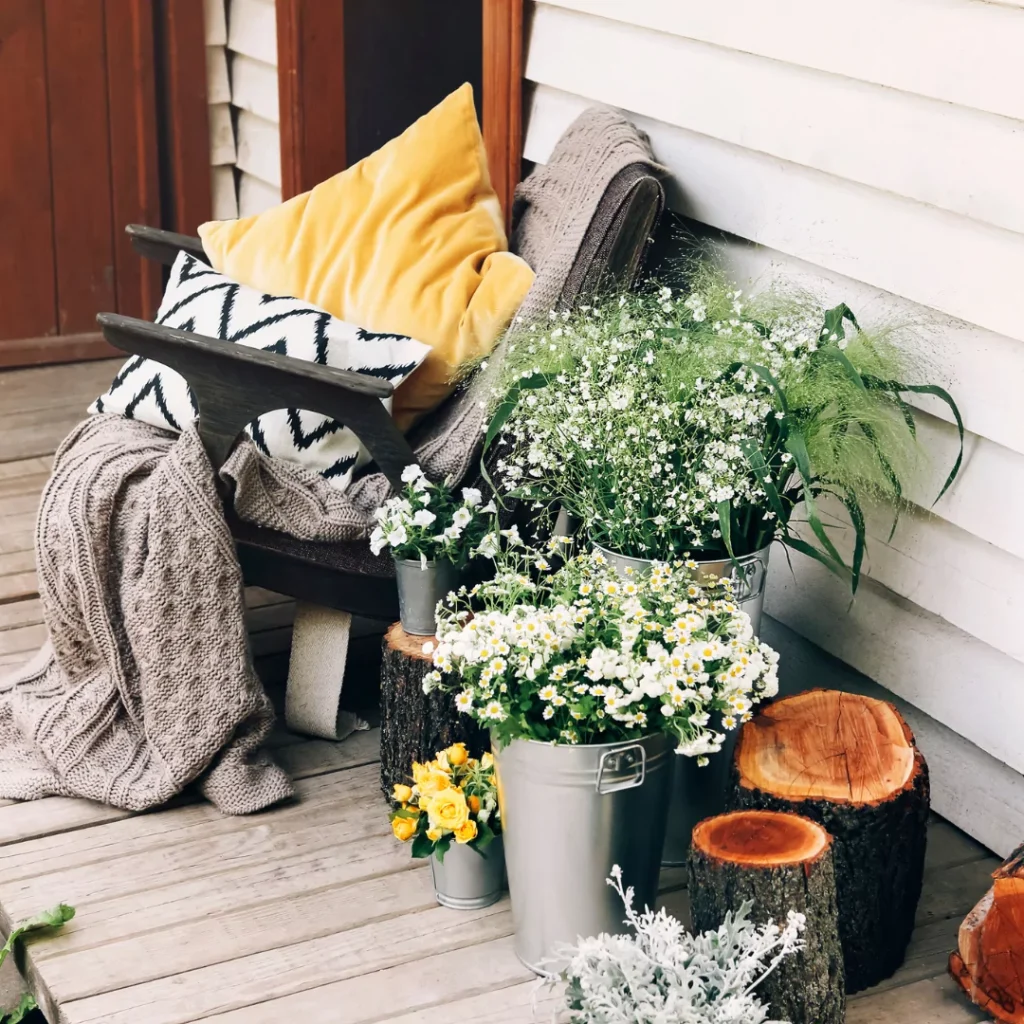
Best for: Design-obsessed homeowners who enjoy the ritual of change
Rather than trying to find one year-round solution, lean into the seasons deliberately. This approach treats your front porch flower pots as a living, rotating display, refreshed four times a year with intention.
A seasonal planting calendar:
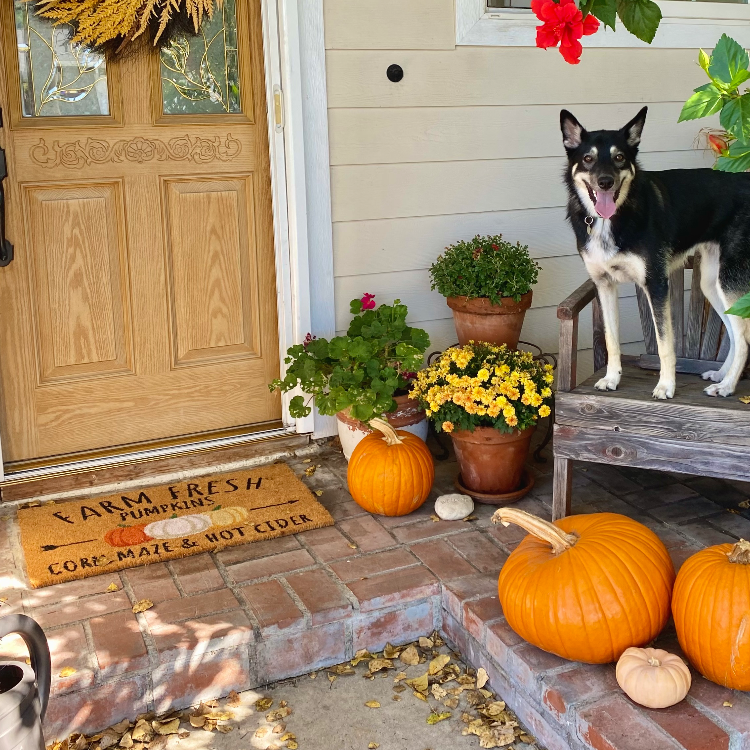
Spring (March–May): Tulips, hyacinths, daffodils, and pansies. Opt for single-color planting or analogous color families, all-white, or apricot to coral.
Summer (June–August): Petunias, zinnias, dahlias, verbena, and calibrachoa. This is the high-impact, maximum-color season. Go bold or go monochromatic.
Autumn (September–November): Ornamental kale, late-season dahlias, chrysanthemums, heuchera, and grasses. Lean into warm tones, rust, amber, deep plum.
Winter (December–February): Structural evergreens dressed with seasonal elements: cyclamen, winter pansies, branches of dogwood, or simple white lights threaded through boxwood.
This system keeps your front entrance looking intentional in every month of the year.
10. The Tonal Pot Collection
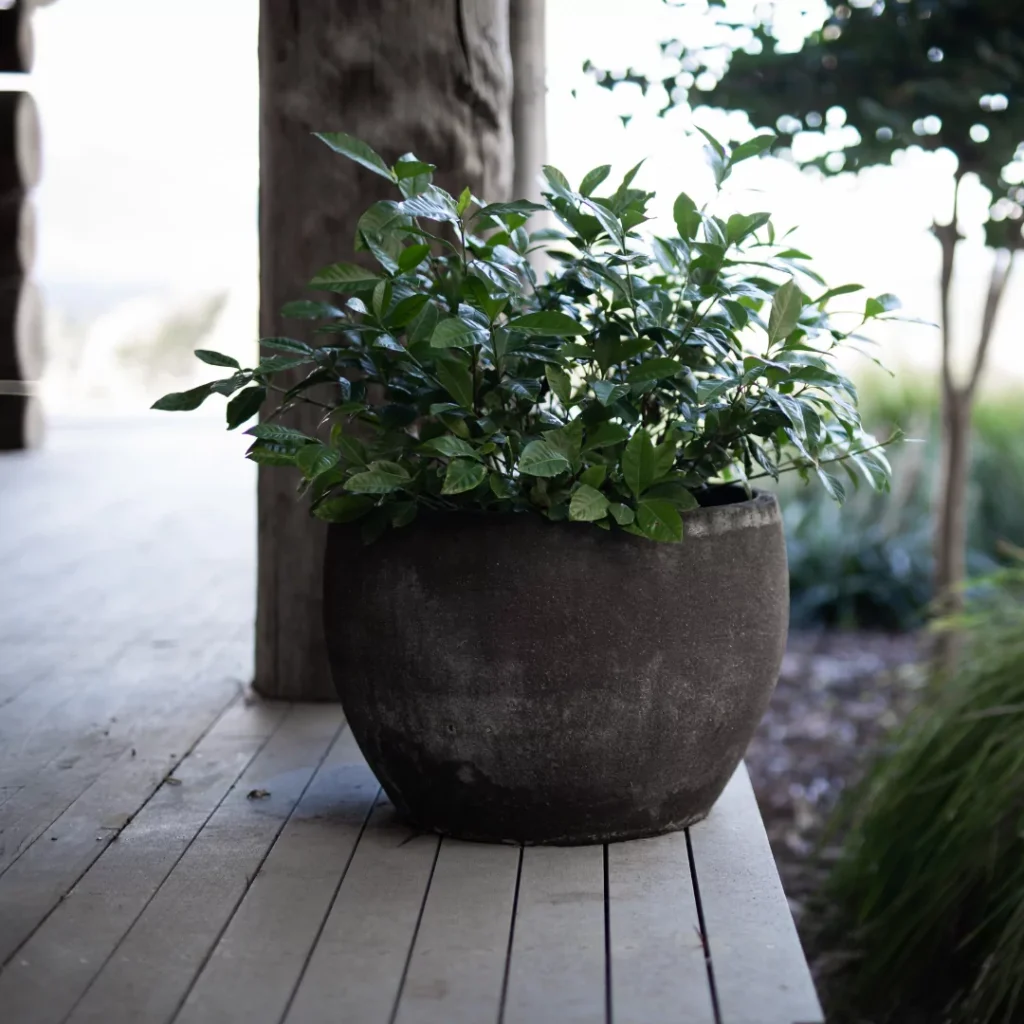
Best for: Design-forward and editorial aesthetics
This is the front porch flower pot idea that most often appears in interior and lifestyle editorial: a curated collection of pots in a tight tonal range, all matte black, all warm white, all aged zinc, all smoke-grey, regardless of size or shape.
The visual power comes entirely from the material and color consistency. The plants become secondary to the vessels themselves.
Tonal palettes that work best:
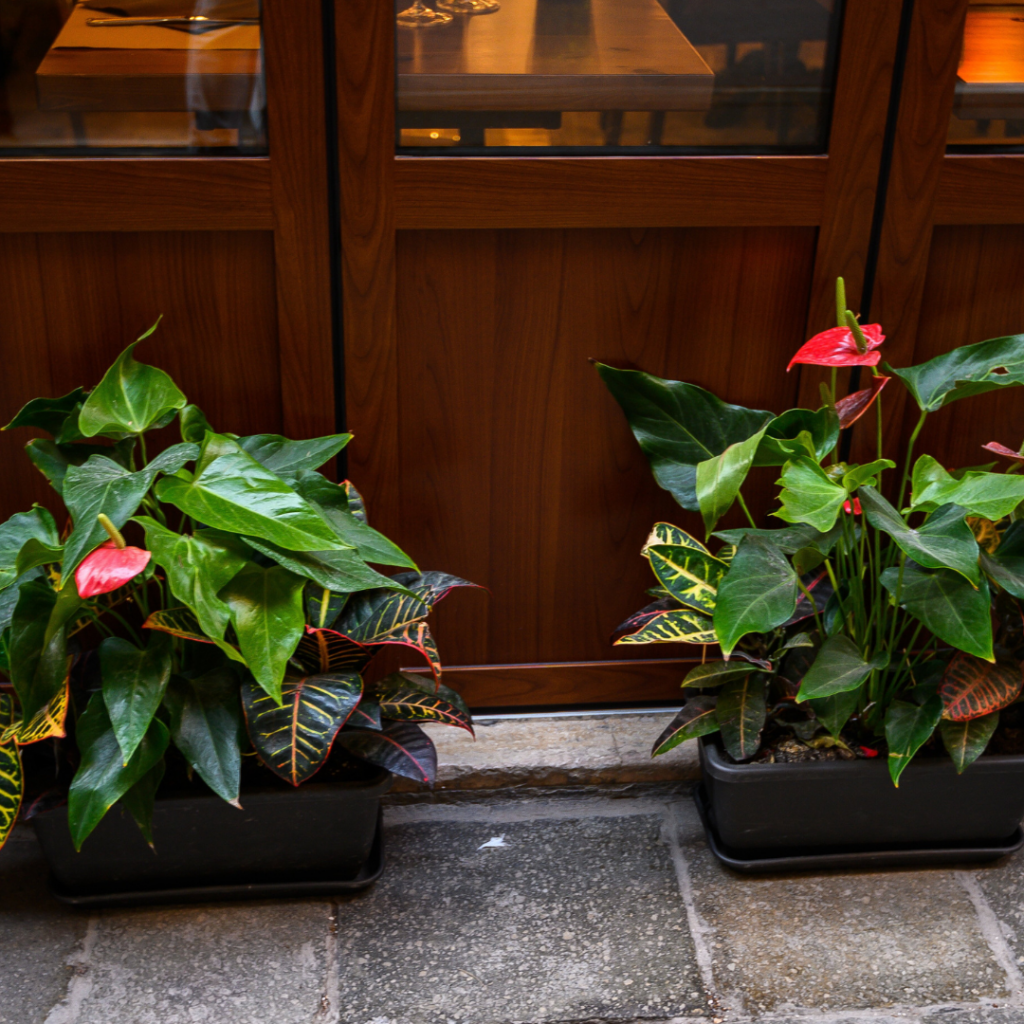
- All-black pots with lush green tropical foliage: deeply sophisticated, architectural
- All-white ceramic or stone-look with silver-foliage plants: cool, editorial, Scandinavian in feel
- All-aged terracotta tones (mixing standard terracotta, dark red, and sand): warm, collected, Mediterranean
- All-zinc or galvanised metal with structural grasses: industrial-meets-natural
This approach is particularly effective for smaller porches where a varied collection of mismatched pots would look cluttered. The tonal unity creates calm.
Choosing the Right Pot Material: A Quick Guide
Before investing in front porch flower pots, it’s worth understanding how different materials perform:
| Material | Durability | Weight | Aesthetic | Best for |
|---|---|---|---|---|
| Terracotta | Medium (frost can crack) | Heavy | Warm, natural | Mediterranean, cottage, rustic |
| Fibreglass | High | Light | Versatile, can mimic any material | Large statement pots |
| Glazed ceramic | Medium | Heavy | Elegant, colour variety | Feature pots, sheltered porches |
| Cast iron | Very high | Very heavy | Classic, architectural | Permanent symmetrical pairs |
| Zinc/galvanised | High | Medium | Industrial, modern | Contemporary homes |
| Concrete | High | Very heavy | Raw, minimal | Modern and brutalist aesthetics |
| Powder-coated steel | High | Medium | Sleek, contemporary | Modern minimal |
The Thriller-Filler-Spiller Formula
Every professional garden designer uses this formula for planting containers, and it works equally well for front porch flower pots.
Thriller: The vertical focal point: a tall, dramatic plant that draws the eye upward. Examples: ornamental grass, standard topiary, tall dahlia, canna lily.
Filler: The mid-level mass: lush plants that fill the volume of the pot and bridge thriller and spiller. Examples: petunias, begonias, impatiens, heuchera.
Spiller: The trailing element that softens the edge of the pot and creates flow. Examples: trailing ivy, sweet potato vine, lobelia, calibrachoa.
A pot planted with all three elements always looks intentional. A pot with only one element, however beautiful that plant may be, often looks unfinished.
Frequently Asked Questions About Front Porch Flower Pots
What flowers are best for front porch pots in full sun?
For full-sun front porch flower pots, petunias, zinnias, lavender, geraniums, and calibrachoa are all highly reliable. They thrive in heat and flower prolifically from late spring through autumn.
What should I plant in front porch pots in the shade?
Shade-tolerant plants for front porch pots include begonias, impatiens, fuchsia, hostas, ferns, and astilbe. For structural shade plants, consider boxwood, fatsia japonica, or small-leafed heuchera varieties.
How often should I water front porch flower pots?
Most front porch flower pots need watering daily in summer, particularly in hot or windy conditions. Porous terracotta dries faster than glazed or plastic pots. A good test: push your finger 2–3cm into the compost, if it’s dry, water thoroughly until it drains freely from the base.
What size pots should I use for my front porch?
As a general rule, err larger. Small pots dry out faster, offer less root space, and look proportionally insignificant next to a door. For a standard front door, pots of at least 40–50cm diameter make a visual impact. For a double door or grand entrance, 60–80cm pots or larger are appropriate.
Can I leave front porch flower pots out all winter?
This depends on the material and your climate. Terracotta can crack if water freezes inside the pot, either move indoors or wrap in horticultural fleece. Fibreglass, zinc, and powder-coated steel pots are generally frost-safe. Always ensure pots have drainage holes to prevent waterlogging, which is the primary cause of winter plant death.
Your Front Porch as an Extension of Your Interior Style
The most compelling front porch flower pot arrangements are extensions of the home’s interior aesthetic, not a separate project. If your interior is warm and natural (linen, wood, terracotta tiles) carry that into your pot choice and plant palette. If your interior is clean and contemporary (marble, matte black, plaster tones) your porch should reflect that too.
Did you like this article? Then you may also like to read about: